Published on
AI on the floor does not replace the sommelier, it empowers them
How artificial intelligence enters wine service without replacing the people on the floor: more context, less repetitive work, a better experience for the guest.
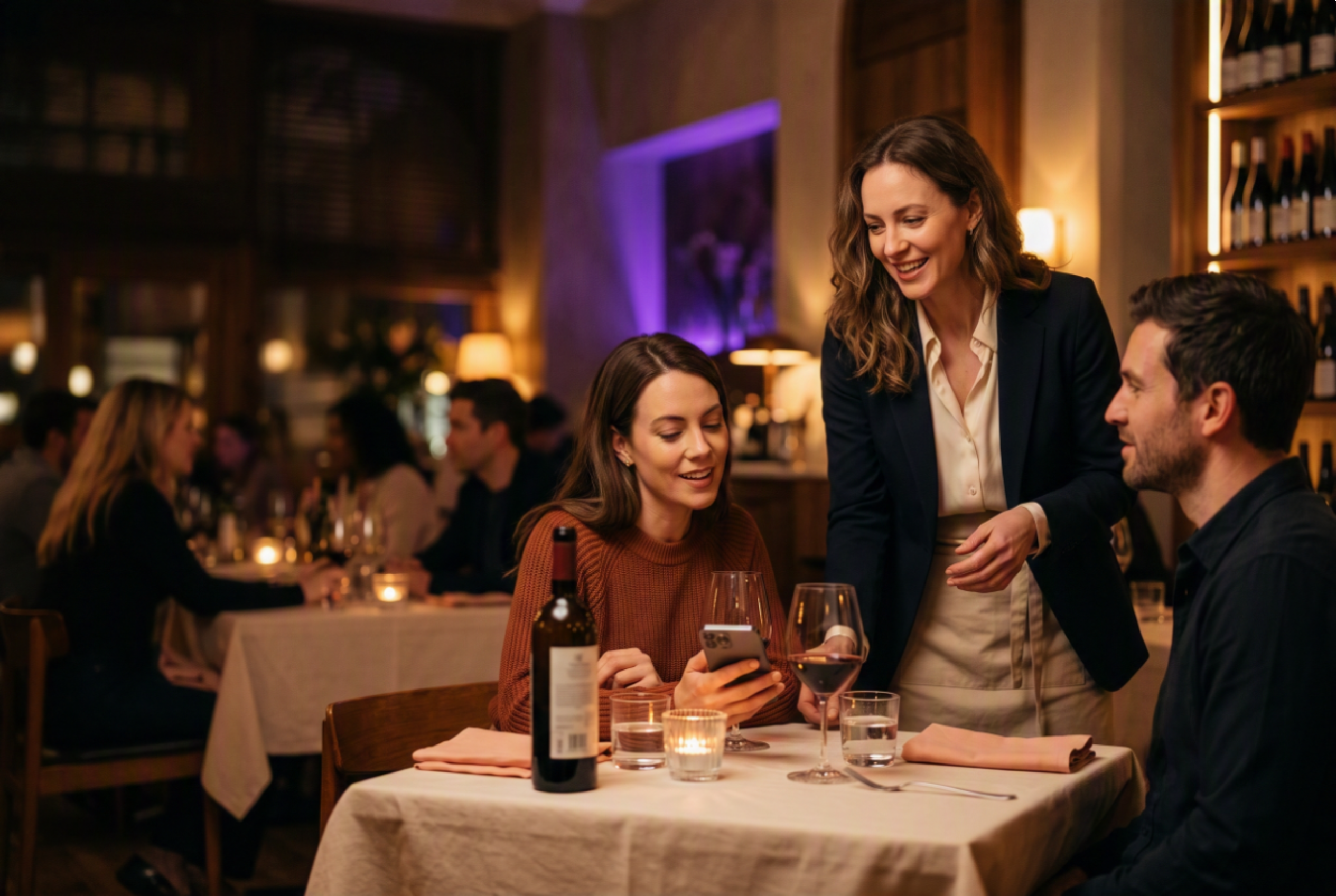
Every time artificial intelligence comes up in hospitality, the first reaction is the same: “it wants to replace people.” With wine, that fear runs even deeper, because the bond between guest and sommelier is built on expertise, listening, and trust. It is hard to imagine software taking that seat.
The truth is simpler and more useful: AI does not take that seat. It frees it. It removes the repetitive, low-value work from the table and gives the floor staff back the time to do the one thing a machine never will: read a person.
What happens on the floor today
In most venues, wine service lives inside two constraints. The first is the list: static, often incomplete, rarely updated, hard to explain to a guest who is not an expert. The second is staffing: qualified people are increasingly hard to find, and the ones you have cannot be everywhere at once.
The result is that plenty of good bottles go unsold, not because the guest would not want them, but because nobody managed to offer them at the right moment. The value is there, but it never reaches the table.
Dioniso, the digital sommelier that works with you
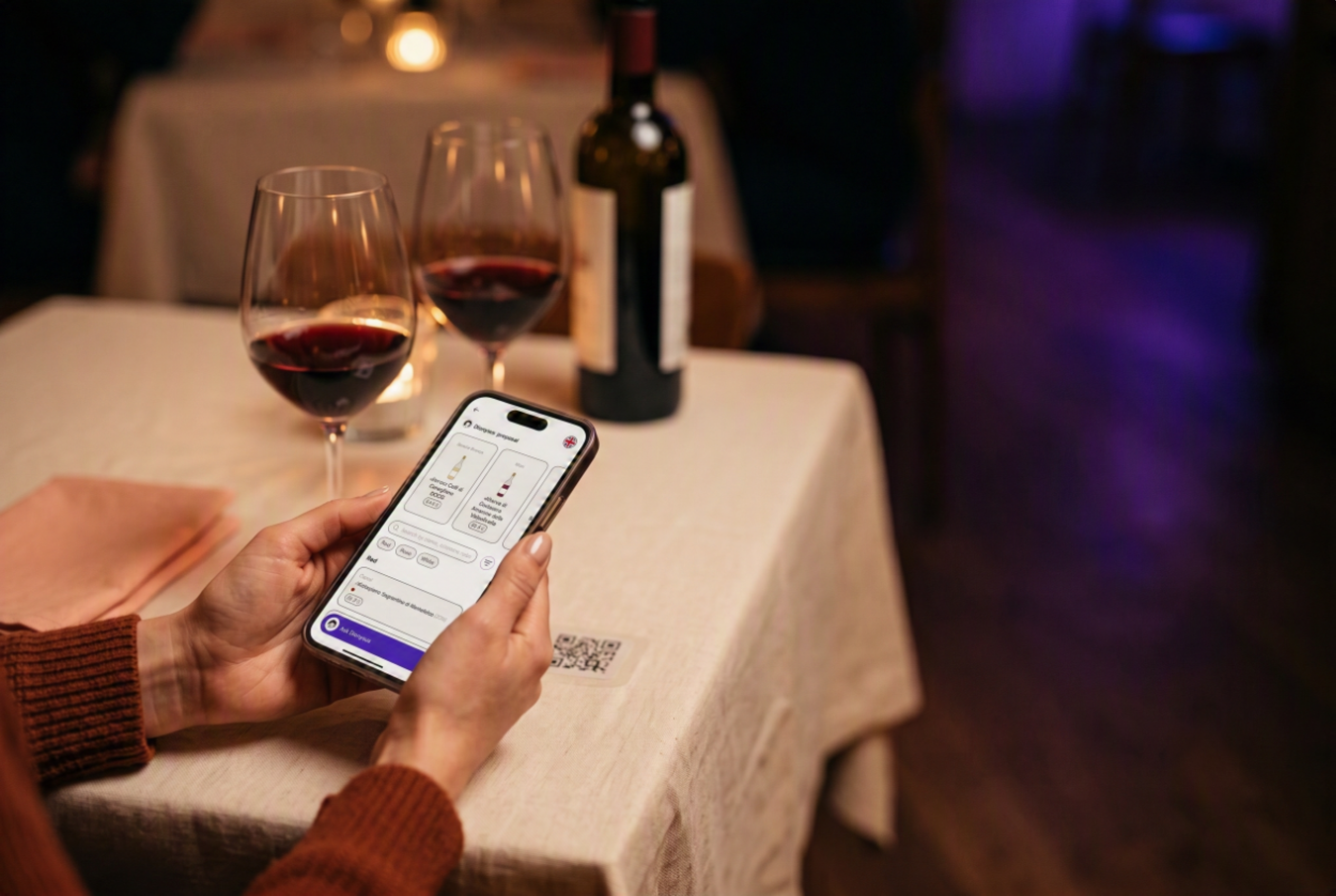
Dioniso is the AI assistant of the Ambrosia ecosystem. It is not a generic chatbot: it is a digital sommelier trained on wine, one that knows the venue’s list and answers guests’ questions in several languages, at dinner or at lunch, when the room is full and nobody has thirty seconds to spare for an explanation.
The guest scans a QR code, explores the list, asks for a pairing, understands what they are drinking. Meanwhile, the floor staff steps in where it matters: reading the table, the personal recommendation, the story that only comes from experience. Dioniso handles the informational layer; the relationship stays human.
Where your team makes the difference
The mistake to avoid is thinking technology and experience are in competition. They are two different layers of the same service. An informed guest, one who already knows what they like and why, is easier to serve and more willing to spend well. They reach the moment of choice with better questions, and your staff starts from a higher level.
It is the same dynamic as a good tool in the kitchen: nobody thinks a precision oven replaces the chef. It handles the predictable work reliably, so the chef’s hand can focus on what counts. With wine, the same holds true.
An ecosystem that grows with the venue
The point is not adopting a single gadget, but giving the venue a layer of intelligence that improves over time. Always-updated digital wine lists, guided tastings, analytics on what works and what does not: data that tells the operator which labels to push and which stories actually land with guests.
Wine is changing its audience. Younger generations discover it in a more digital, experiential way; they want to understand and take part, not just be served. Whoever meets that shift with the right tools loses nothing of their craft: they put it in a position to matter more.
AI is not the sommelier of the future. It is the tool that lets the sommelier, and the whole floor, do their job better.
